

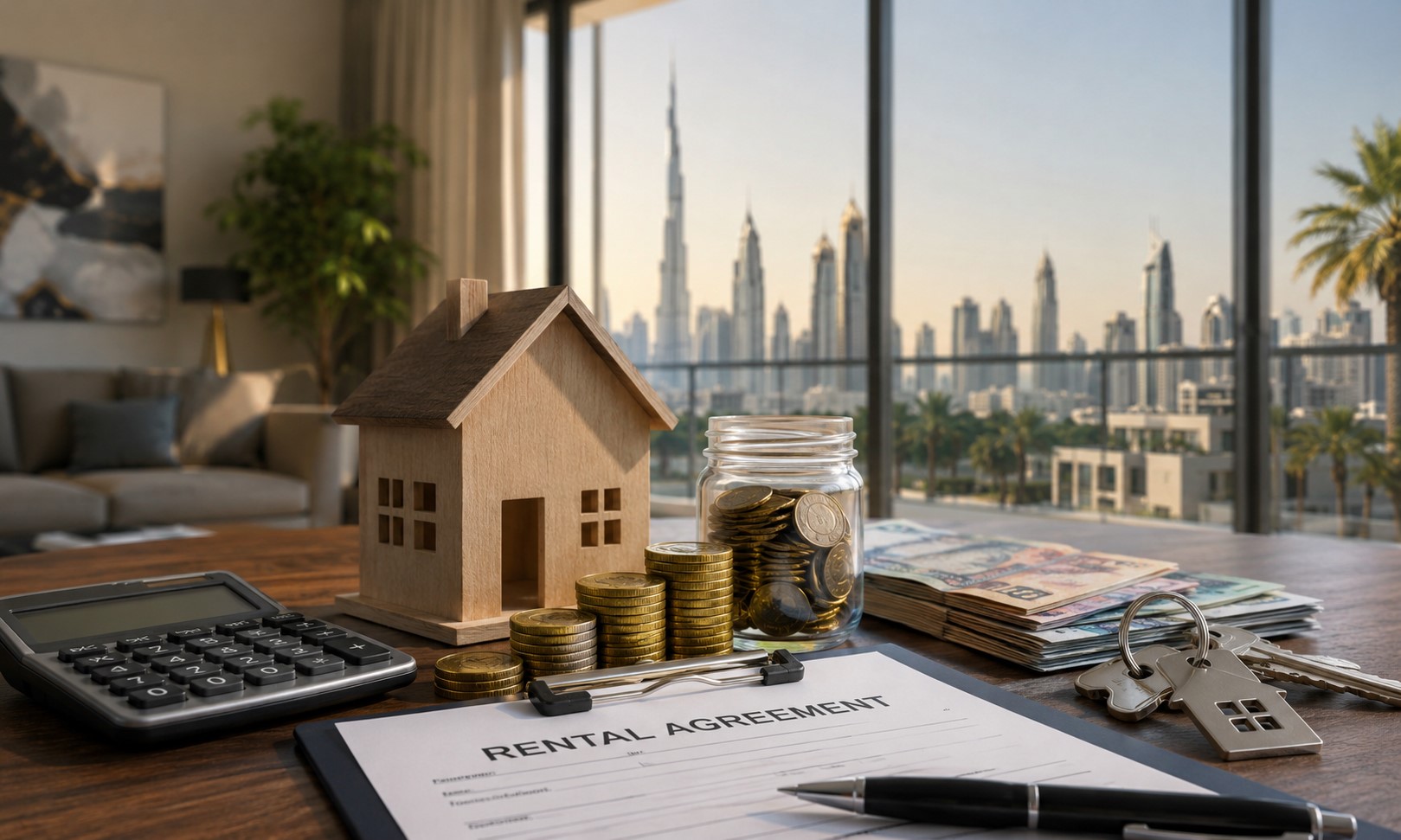
Ask anyone who’s moved into a new apartment in Dubai or Abu Dhabi. They’ll tell you about the exact moment reality hit. Usually it’s somewhere between signing the tenancy contract and opening that first DEWA bill.
The UAE rental market is fairly upfront about headline rent. What doesn’t get the same spotlight are the costs sitting quietly around it. Some are mandatory. Some you’ll forget about until the invoice lands in your inbox.
All of them are worth knowing before you sign anything. Here are nine costs that regularly catch new renters completely off guard.
1. The Security Deposit
Most landlords want a refundable deposit upfront. Typically around 5% of annual rent for unfurnished properties, closer to 10% for furnished ones.
It’s meant to cover damage beyond normal wear and tear. But here’s the catch — disputes over what actually counts as “damage” versus “wear and tear” happen often enough that documenting the property’s condition on move-in day genuinely matters.
2. Real Estate Agency Commission
Rented through an agent? Expect a commission fee, generally around 5% of annual rent, due at the start of the tenancy.
This is separate from the deposit. And it lands on top of your first rent payment, which is exactly the surprise that catches so many first-time renters off guard.
Read More: Dubai Family Visit Visa: Minimum Salary Requirements Explained for 2026
3. Ejari Registration Fee
In Dubai, this isn’t optional. Registering your tenancy contract through Ejari is a legal requirement, and you’ll need it for everything from DEWA connection to visa paperwork.
The fee itself sits around AED 220, though additional charges can apply depending on where you register.
4. DEWA Security Deposit
Setting up your electricity and water account requires its own refundable deposit. The amount shifts depending on whether you’re in an apartment or a villa.
It’s a separate line item from your actual usage. Fully refundable when you close the account, assuming there are no outstanding bills hanging around.
5. The Municipality Housing Fee
This one genuinely surprises people. Dubai charges a housing fee, commonly 5% of your annual rent. But instead of billing it as one lump sum, it gets split and folded into your monthly DEWA bill.
So if your DEWA bill looks higher than you expected? This fee is usually why.
6. District Cooling Charges
Many newer buildings, especially in freehold communities, run on district cooling providers like Empower or Tabreed instead of standard AC units.
These come with their own connection fees and separate consumption charges — entirely apart from DEWA. During peak summer months, they can add up fast.
7. Post-dated Cheque & Banking Fees
Rent here traditionally gets paid through post-dated cheques, often split across one to four payments a year.
Each cheque can carry a small bank processing fee. A bounced one brings far steeper consequences, both financially and legally. Timing your account balance around each cheque date matters more than most people expect.
8. Moving & Relocation Costs
Movers. Packing materials. Short-term storage.
None of it makes it into anyone’s rental budget, yet it adds up quickly, especially for larger apartments or villa moves. Getting a couple of moving quotes before signing a lease saves a nasty surprise in the same month you’re already covering a deposit and agency fee.
9. Maintenance & Repair Grey Areas
Tenancy contracts usually spell out who’s responsible for what. But minor maintenance — AC servicing, small repairs, appliance issues — often falls into a grey zone between landlord and tenant.
Clarifying this before move-in, ideally in writing, saves a lot of back-and-forth down the line.
Why These Costs Matter More
None of this is hidden in the sense of being secret. It’s published, standard practice, entirely above board.
The real issue? These costs rarely appear in one place. A rental listing shows the annual rent. It doesn’t show the Ejari fee, the DEWA deposit, or the district cooling connection charge that shows up a few weeks later.
Budget for the total moving-in cost, not just the headline rent. That single shift makes the entire process far less stressful.
Read More: 9 Strict Left Lane Rules Dubai Drivers Must Follow to Avoid Fines
FAQs
How much should I budget beyond the annual rent? A reasonable estimate includes the security deposit, agency commission, Ejari fee, and DEWA deposit — together, these can add an extra 10–15% on top of annual rent.
Is the security deposit refundable? Yes, provided there’s no damage beyond normal wear and tear and no outstanding bills at the end of the tenancy.
What is the Dubai Municipality housing fee? A fee, commonly 5% of annual rent, billed monthly through your DEWA account rather than as one upfront charge.
Do all buildings use DEWA for cooling? No. Many newer developments use separate district cooling providers, which come with their own fees outside your standard DEWA bill.
Renting in the UAE isn’t more complicated than anywhere else. The full cost picture just gets revealed in stages rather than upfront. Know what’s coming, from the Ejari fee to that first inflated DEWA bill, and the whole move-in gets a lot smoother.
