

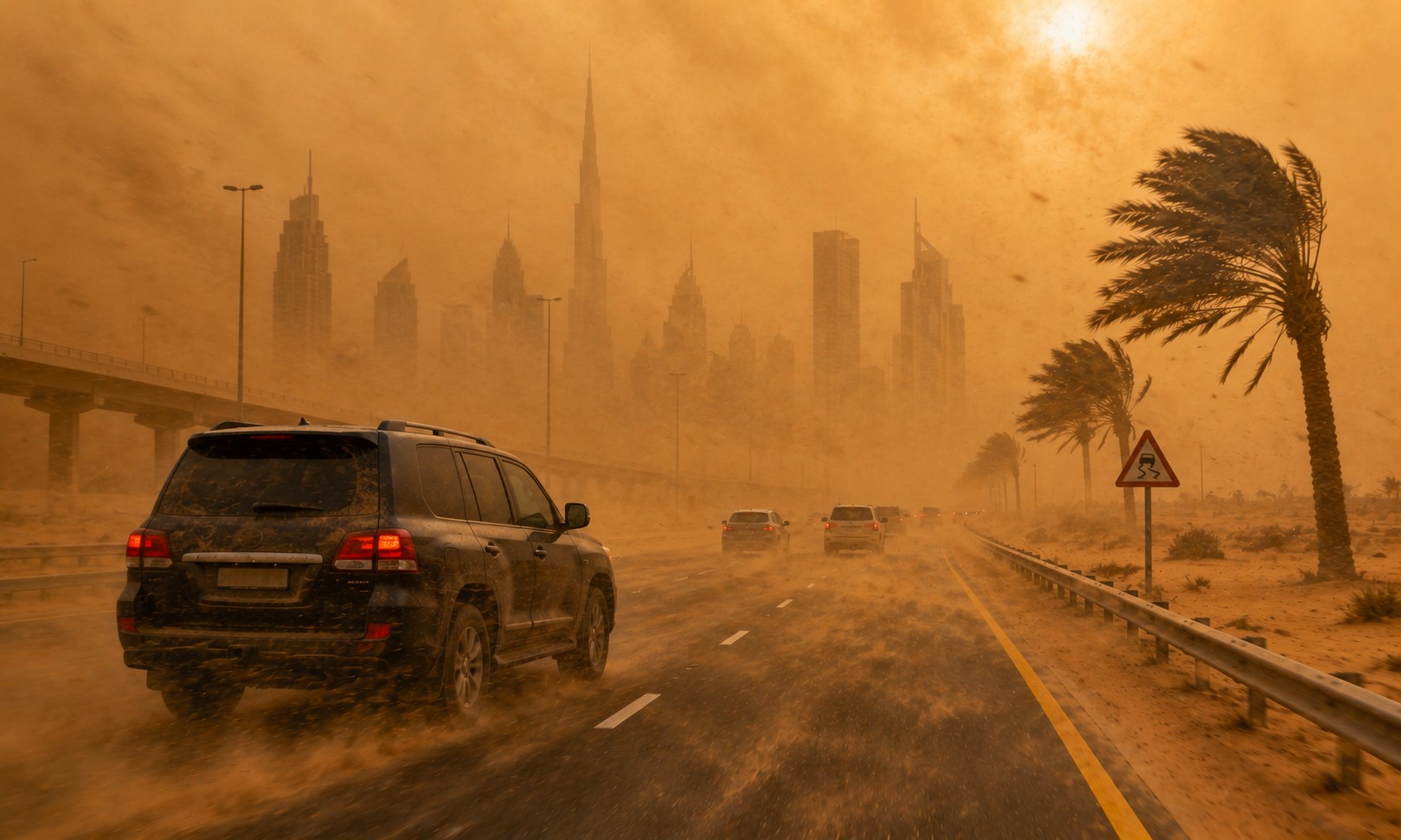
Sandstorms are a common weather phenomenon in the UAE, particularly during the summer months. While many are short-lived, they can significantly reduce visibility, increase the risk of accidents and make driving extremely hazardous.
If you find yourself on the road during a sandstorm, knowing how to respond can make all the difference. Here’s a practical guide to staying safe before, during and after driving in dusty conditions.
Why Are Sandstorms Dangerous?
Strong winds can lift large amounts of sand and dust into the air, creating poor visibility and making it difficult to see other vehicles, road signs and lane markings.
In severe conditions, visibility can drop to just a few metres, increasing the likelihood of collisions and sudden braking. Sandstorms can also affect vehicle handling, especially on open highways, and reduce traction if dust mixes with moisture.
Check the Weather Before You Travel
Before setting off on a long journey, check the latest weather forecasts and traffic updates. If authorities issue warnings about sandstorms or reduced visibility, consider delaying your trip until conditions improve. Planning ahead can help you avoid unnecessary risks.
Read More: Travelling Soon? Here’s What UAE Pet Owners Should Know Before Leaving Their Pets Behind
Reduce Your Speed
One of the most important safety measures during a sandstorm is to slow down. Driving at a reduced speed gives you more time to react to changing road conditions and helps maintain a safe distance from the vehicle ahead. Avoid sudden braking or sharp steering movements, which can cause you to lose control of your vehicle.
Turn On Your Headlights
Use your low-beam headlights to improve your visibility to other road users. Avoid using high beams, as the light can reflect off the dust particles and make visibility even worse.
Keep a Safe Following Distance
Dust and sand can make it difficult to judge the distance between vehicles. Leave extra space between your car and the vehicle in front to allow enough time to react if traffic suddenly slows or stops.
Avoid Overtaking Unless Necessary
Passing other vehicles during a sandstorm can be dangerous due to limited visibility. Stay in your lane whenever possible and avoid unnecessary lane changes until conditions improve.
Should You Use Hazard Lights While Driving?
Hazard warning lights are generally intended to indicate that a vehicle is stationary or experiencing an emergency. Using them while your vehicle is moving can confuse other drivers.
If visibility becomes extremely poor and you need to stop, move safely off the road—if possible—and then use your hazard lights to alert approaching traffic. Always follow the latest guidance issued by local traffic authorities.
If Visibility Becomes Too Poor
If you can no longer see the road clearly:
- Reduce your speed gradually.
- Avoid braking suddenly.
- If it is safe, pull over completely away from moving traffic.
- Turn on your hazard lights once your vehicle is stationary.
- Remain inside the vehicle until visibility improves.
Stopping in an active traffic lane should be avoided unless there is no safer alternative.
Keep Your Windows Closed
Closing your windows and using your vehicle’s air conditioning on the recirculation setting can help reduce the amount of dust entering the cabin. This improves comfort and helps maintain better air quality inside the vehicle.
Be Alert for Sudden Obstacles
Sandstorms can hide:
- Broken-down vehicles
- Road debris
- Animals
- Pedestrians
- Traffic congestion
Stay focused on the road and avoid distractions such as using your mobile phone while driving.
After the Sandstorm
Once conditions improve, it’s a good idea to inspect your vehicle.
Check:
- Windscreen and windows
- Headlights and taillights
- Air filter
- Tyre condition
- Windshield washer fluid
If your vehicle has been exposed to heavy dust for an extended period, a thorough cleaning and maintenance check may help prevent longer-term issues.
Emergency Kit for UAE Drivers
Keeping a few essentials in your vehicle can be useful during adverse weather conditions.
Consider carrying:
- Drinking water
- Fully charged mobile phone
- Phone charger or power bank
- Flashlight
- Basic first-aid kit
- Emergency contact numbers
These items can be especially helpful if you become stranded while waiting for conditions to improve.
Frequently Asked Questions
Is it safe to drive during a sandstorm?
If visibility is significantly reduced, delaying your journey is the safest option. If you’re already driving, reduce your speed and follow official safety guidance.
Should I use high-beam headlights?
No. High beams can reflect off airborne dust and reduce visibility even further. Use low-beam headlights instead.
Can I stop on the roadside?
Only if it is safe to do so. Move as far away from moving traffic as possible before stopping and switch on your hazard lights once the vehicle is stationary.
How can I protect my car during a sandstorm?
Keep windows closed, avoid unnecessary driving during severe weather, and inspect your vehicle after the storm for dust-related damage.
What should I do if visibility suddenly drops?
Slow down gradually, increase your following distance and, if necessary, pull over safely until conditions improve.
Read More: Abu Dhabi and Qatar F1 Races Still on Track, Final Decision Expected by September
Final Thoughts
Driving during a sandstorm requires extra caution and patience. By reducing your speed, using the correct lights, maintaining a safe distance from other vehicles and avoiding unnecessary risks, you can significantly improve your safety on UAE roads.
If weather conditions become severe enough to make driving unsafe, postponing your journey is often the best decision. Staying informed through official weather and traffic updates can help you avoid dangerous conditions and reach your destination safely.
