
The UAE has officially given the dirham a new visual identity, and if you’ve already started spotting the new symbol on prices, invoices or digital platforms, you’re not imagining things. Introduced in March, the new UAE dirham symbol has been designed to reflect the country’s heritage, economic stability and ambitions for the future.
But there’s more to using it than simply dropping the symbol in front of a price. Authorities have issued guidelines covering how the symbol should be displayed across everything from receipts and cheques to price tags, websites, payment systems and financial apps. So, if you’re a business owner, designer, retailer or simply a UAE resident who wants to know how the new symbol should be used, here’s everything you need to know.
What Does The New UAE Dirham Symbol Look Like?
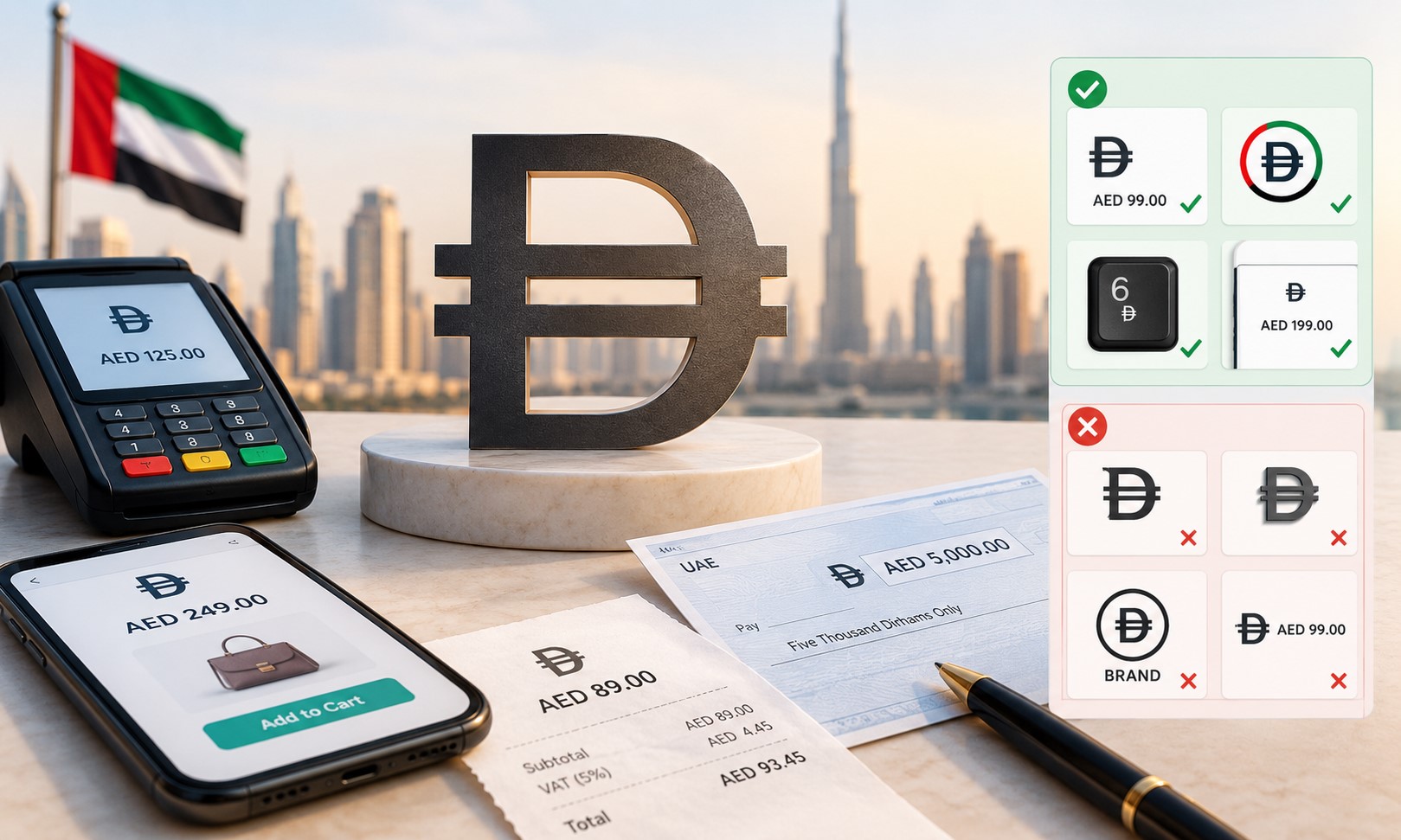
The new dirham symbol is based on the English letter “D”, representing the first letter of dirham, with two horizontal lines running through it. Those two lines are intended to represent stability and resilience qualities associated with the UAE’s financial and economic system.
The design also incorporates elements inspired by the UAE flag and Arabic calligraphy, including influences from traditional styles such as Thuluth and Diwani. The result is a symbol designed to combine traditional UAE identity with a more modern financial aesthetic.
There’s Also A Digital Version
The UAE has also introduced a digital version of the dirham symbol. Unlike the standard version, the digital symbol appears within a circular frame and incorporates the UAE’s national colours.
The circular design represents ideas such as security and continuity, while the use of national colours connects the digital version back to the country’s identity. This version is particularly relevant as the UAE continues expanding its digital payments and financial technology ecosystem.
Read More: Where to Get a Nol Card in Dubai: New Al Ansari Exchange Locations
Where Should You Use The New Dirham Symbol?
The symbol isn’t intended to replace every existing reference to the UAE dirham. Instead, official guidance outlines specific situations where it can be used.
You Can Use It On:
- Physical currency
- Cheques
- Invoices
- Receipts
- Point-of-sale systems
- ATMs
- Online price displays
- In-store price tags
- Financial applications
- Accounting software
- Digital user interfaces
Essentially, if you’re displaying a monetary value, the new symbol can be used in the relevant formats outlined by the guidelines.
Where Should You Avoid Using It?
There are also some important restrictions. The symbol shouldn’t simply become another decorative element for businesses or brands.
According to the guidelines, avoid using it:
- As part of a company logo
- As a branding element
- On splash screens
- In page headers
- As a decorative graphic
- As a complete replacement for the written word “Dirhams”
In other words, the symbol represents the currency it isn’t intended to become a brand identity of its own.
How Should The Symbol Be Positioned?
There are specific design rules around positioning and spacing too. For standard displays, the symbol should appear to the left of the numerical amount. It should also maintain its original proportions and orientation.
Most importantly, don’t squeeze it into a space just because you’re working with a particularly small price tag or digital interface. The guidelines call for a minimum of 2mm of clear space around the symbol.
That means giving it enough room to remain visually distinct from surrounding numbers, text and graphics.
What About The Keyboard?
For people working with digital systems, there’s another useful detail. The dirham symbol is assigned to the number 6 key on the keyboard.
For single-language layouts, the symbol should be centred appropriately. For dual-language layouts, the positioning changes, with the symbol placed in the top-left corner according to the relevant guidance.
This is particularly useful for designers, developers and businesses updating their websites, checkout systems and accounting platforms.
How To Use The Symbol On Cheques
Cheques have their own requirements. When writing a numerical amount, the dirham symbol should appear before the number. The symbol should also match the numerical amount in terms of:
- Size
- Weight
- Visual treatment
However, there’s an important distinction.
When the amount is written out in words, you should still write “Dirhams” in full rather than attempting to replace the written word with the symbol.
What About Receipts?
For receipts, the symbol should again appear before the numerical amount. The font, size and weight should be consistent with the surrounding text so the symbol doesn’t look out of place.
Receipts should also follow the applicable formatting and spacing requirements, particularly when businesses are updating their point-of-sale systems.
Price Tags Have One Very Important Rule
If you’re shopping in the UAE and start seeing the new symbol on price tags, there’s one thing to remember:
Don’t use the new symbol and “AED” together for the same price.
Choose one. For example, a business shouldn’t display both the new dirham symbol and AED beside the same numerical amount.q
The symbol should appear clearly before the price and remain easy for customers to read.
The Big Do’s
If you’re a business, designer or developer updating your systems, here’s the quick checklist.
Do:
- Keep the symbol’s original shape and proportions.
- Maintain its correct orientation.
- Place it to the left of the numerical amount where required.
- Maintain sufficient clear space around it.
- Make sure there’s enough contrast against the background.
- Keep its size and visual weight consistent with surrounding numbers.
- Use either the new symbol or “AED” for a price — not both.
- Follow the relevant formatting requirements for different applications.
And The Don’ts
There are a few things you definitely shouldn’t do.
Don’t:
- Stretch or squash the symbol.
- Change its proportions.
- Rotate it.
- Add decorative effects.
- Use it as a company logo.
- Turn it into a branding element.
- Place it where it becomes difficult to read.
- Combine it with “AED” for the same displayed amount.
- Replace the written word “Dirhams” when an amount is being written out in words.
Why The New Symbol Matters
At first glance, introducing a currency symbol might seem like a relatively small change. But currency symbols become part of everyday life surprisingly quickly. Think about how often you see $, € or £ throughout your day — on websites, menus, receipts, price tags, apps and financial documents.
The UAE’s new dirham symbol is intended to create that same kind of instant recognition for the country’s currency while giving the dirham a distinct visual identity.d
And as more businesses, banks, retailers and digital platforms adopt it, residents are likely to start seeing it increasingly often.
Read More: Wizz Air Returns To Dubai And Abu Dhabi This Winter: Routes, Dates & Fares
The Khaleej Journal Take
The new dirham symbol isn’t just another design update. It is gradually becoming part of how prices and monetary values are displayed across the UAE from your shopping receipt to the checkout page on your phone. For most residents, the change will probably be pretty simple: see the symbol, recognise it as the dirham and carry on shopping.
For businesses, designers and developers, however, there are a few more rules to keep in mind. So before you copy, resize or redesign the new symbol for your next price tag, website or invoice, make sure you follow the official guidelines.
After all, there’s a right way to use the new dirham symbol and simply making it look good isn’t necessarily enough.
