

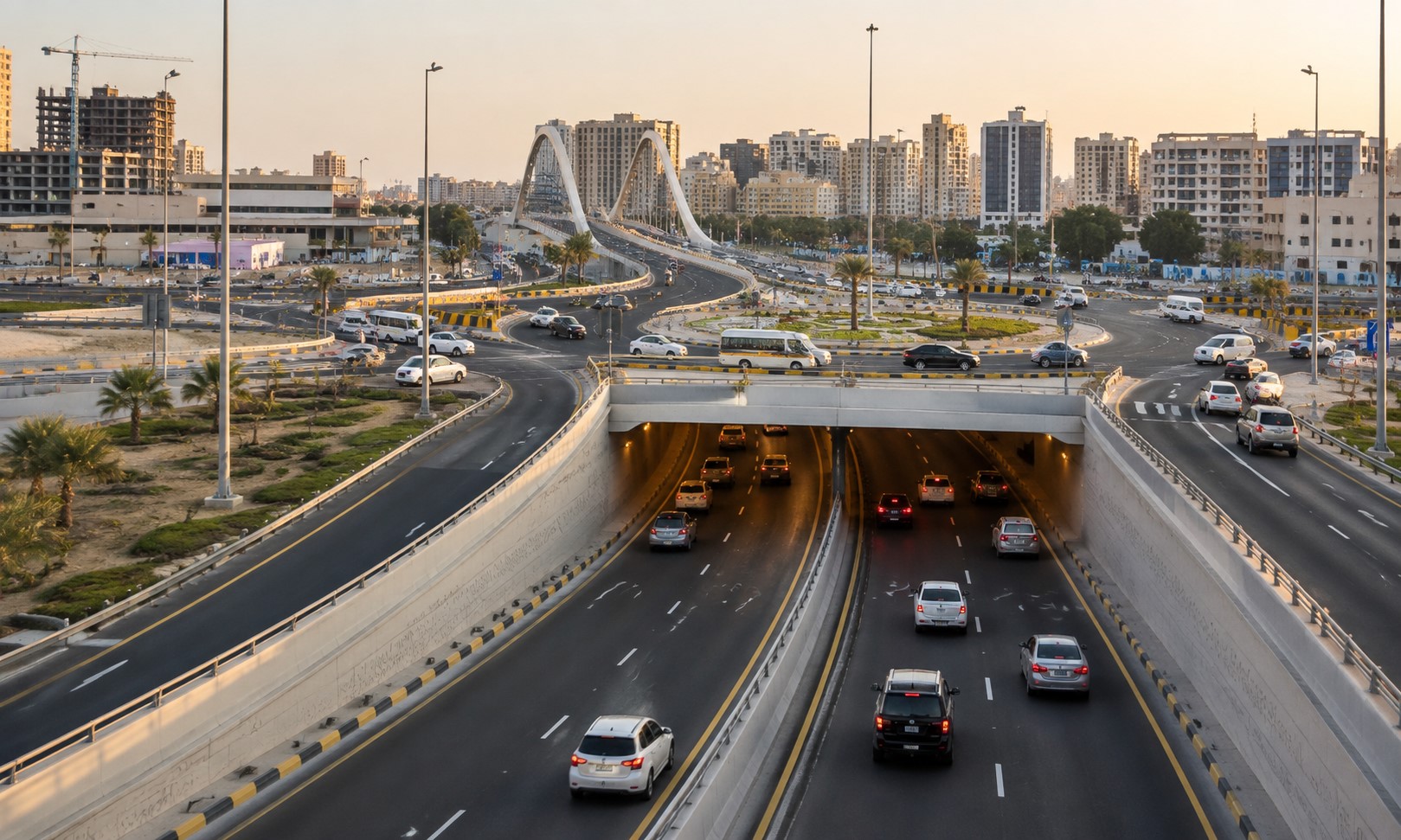
If you regularly commute between Dubai and Sharjah, there could be some welcome relief ahead. Sharjah’s Al Taawun Tunnel project is expected to significantly improve traffic movement around one of the busiest connections between the two emirates. The first phase of the project, including a 500-metre underground tunnel, is expected to open in November 2026, ahead of the next Sharjah International Book Fair.
The project is designed to cut waiting times by up to 85%, while creating a more direct route between Al Taawun Street, Al Nahda Bridge and Dubai. Here’s what motorists need to know about the project, where the tunnel will take you and when you can expect it to open.
When Will The Al Taawun Tunnel Open?
The first phase of the Al Taawun Tunnel project is expected to open in November 2026. The timing has been planned ahead of the next edition of the Sharjah International Book Fair, which is scheduled to take place in November. The wider project is expected to be fully completed by February 2027. For commuters, the opening of the first phase should provide an earlier improvement while the remaining works continue.
What Is The Al Taawun Tunnel?
At the heart of the project is a 500-metre underground tunnel beneath Al Taawun Roundabout. Instead of forcing motorists to pass through the existing surface-level roundabout, the tunnel will provide a more direct route between Al Taawun Street and Al Nahda Bridge towards Dubai.
The wider project also includes connecting roads leading towards Sheikh Mohammed bin Zayed Street and Emirates Road. The idea is simple: move a significant amount of traffic underground and reduce the pressure on the busy junction above.
How Much Could Waiting Times Be Reduced?
This is potentially the biggest benefit for Dubai-Sharjah commuters. The project is expected to reduce waiting times by up to 85% around the affected junction. The tunnel is designed to provide a more uninterrupted route, reducing the amount of time motorists spend waiting at the existing roundabout and surrounding intersections.
However, the 85% figure refers to waiting times at the affected traffic movement, rather than meaning every Dubai-Sharjah journey will suddenly become 85% faster. Actual journey times will still depend on traffic levels, destination, time of day and conditions elsewhere on the road network.
Read More: When Is Ramadan 2027 In UAE? Likely Dates For Eid Al Fitr And Eid Al Adha
How Many Vehicles Can The New Junction Handle?
The tunnel will be supported by a new signalised intersection designed to handle around 4,200 vehicles per hour in each direction during peak periods. This additional capacity is expected to improve traffic flow around the tunnel and reduce pressure on existing surface-level roads. For motorists, the additional capacity should help distribute traffic more efficiently instead of concentrating vehicles around the existing roundabout.
Where Will The Al Taawun Tunnel Take Drivers?
The underground route will connect Al Taawun Street directly towards Al Nahda Bridge and Dubai.
The wider road network will also provide connections towards:
- Sheikh Mohammed bin Zayed Street
- Emirates Road
- Al Noor Road corridor in the future
The project will therefore do more than simply bypass the roundabout. It is intended to create a more connected route between important roads in Sharjah and the wider UAE network.
Will The Tunnel Help Dubai-Sharjah Commuters?
For people travelling between the two emirates every day, the location of the project is particularly significant. Al Taawun Street is already an important traffic artery connecting Sharjah with Dubai, and congestion can build up quickly around major intersections during morning and evening peaks.
By taking through-traffic underground, the project should reduce pressure on the surface-level junction and improve the movement of vehicles through the area. However, it is important to remember that the tunnel won’t eliminate congestion across the entire Dubai-Sharjah corridor. Traffic on routes such as Al Ittihad Road, Al Nahda and other major connections can still affect overall journey times.
The Tunnel Will Also Improve Access To Expo Centre Sharjah
Another expected benefit is improved access to Expo Centre Sharjah. The surrounding road improvements are designed to provide more direct access to the exhibition centre, which regularly attracts large numbers of visitors for exhibitions, events and trade shows. This could be particularly useful during major events when traffic volumes around Al Taawun can increase significantly.
What Happened To The Al Taawun Roundabout Monument?
One of the more noticeable changes during construction was the removal of the iconic Al Taawun Roundabout monument. The monument had to be dismantled because of the underground construction works.
Before construction began, engineering teams examined its foundations and found that they were deeply rooted in the ground. This made it difficult to construct the tunnel underneath without removing the structure. But the monument isn’t being permanently erased.
Sheikh Dr Sultan bin Muhammad Al Qasimi, Ruler of Sharjah, has reassured residents that the monument will be redesigned and rebuilt at its original location once the project is completed.
So, while motorists may not see it during construction, the landmark is expected to return.
What Other Road Projects Are Happening In Sharjah?
The Al Taawun Tunnel is just one part of a wider programme of road improvements across Sharjah.
Sheikh Khalifa bin Zayed Street-Maliha Street Intersection
Another major project involves the intersection of Sheikh Khalifa bin Zayed Street and Maliha Street.
The project includes:
- A three-lane, approximately 500-metre overpass
- Nearly 2.5 kilometres of surface roads
- Improved connections towards Maliha Road
The AED 140 million project is expected to double traffic-flow efficiency and reduce the journey from central Sharjah towards Maliha Road from around 20 minutes to approximately 10 minutes.
Emirates Road Expansion
Sharjah has also expanded capacity on Emirates Road. Two additional lanes were opened on a five-kilometre stretch towards Wadi Al Amardi, increasing the road from six lanes to eight. The expansion is expected to increase capacity by around 33% and reduce peak-hour journey times by up to 25%.
Road Maintenance And Safety Works
Road maintenance is also continuing in areas including Al Jazzat and Al Hazana. Recent works have included road resurfacing and the renewal of road markings, covering approximately:
- 785 metres in Al Jazzat
- 730 metres in Al Hazana
These smaller projects are part of the broader effort to improve road quality and safety across the emirate.
What Does This Mean For Drivers?
The Al Taawun Tunnel should provide a significant improvement around one of Sharjah’s busiest traffic points, particularly once the wider project is completed.
For Dubai-Sharjah commuters, the key changes to remember are:
- First phase opening: November 2026
- Full project completion: Expected February 2027
- Tunnel length: Approximately 500 metres
- Expected waiting-time reduction: Up to 85%
- Peak capacity at the new signalised junction: Around 4,200 vehicles per hour in each direction
- Main connection: Al Taawun Street towards Al Nahda Bridge and Dubai
- Additional links: Sheikh Mohammed bin Zayed Street and Emirates Road
- Expo Centre Sharjah: Improved access expected
Read More: RTA Upgrades Roads Around 6 Dubai School Districts Ahead Of Back-To-School Season
A Potential Relief For One Of The UAE’s Busiest Commuting Routes
The daily Dubai-Sharjah commute is a reality for thousands of residents, and even relatively small improvements at major junctions can make a noticeable difference during peak hours. The Al Taawun Tunnel is designed to tackle congestion at one particularly important point by giving through-traffic a direct underground route instead of sending every vehicle through the surface-level roundabout.
With the first phase expected to open in November 2026 and the full project scheduled for completion in February 2027, commuters won’t have to wait too much longer to see how much difference the new infrastructure makes. For now, motorists should continue following temporary traffic signs and directions around the construction area and allow extra time when travelling through Al Taawun.
If the project delivers the expected 85% reduction in waiting time at the affected junction, Dubai-Sharjah commuters could soon have one less traffic headache to deal with.
