

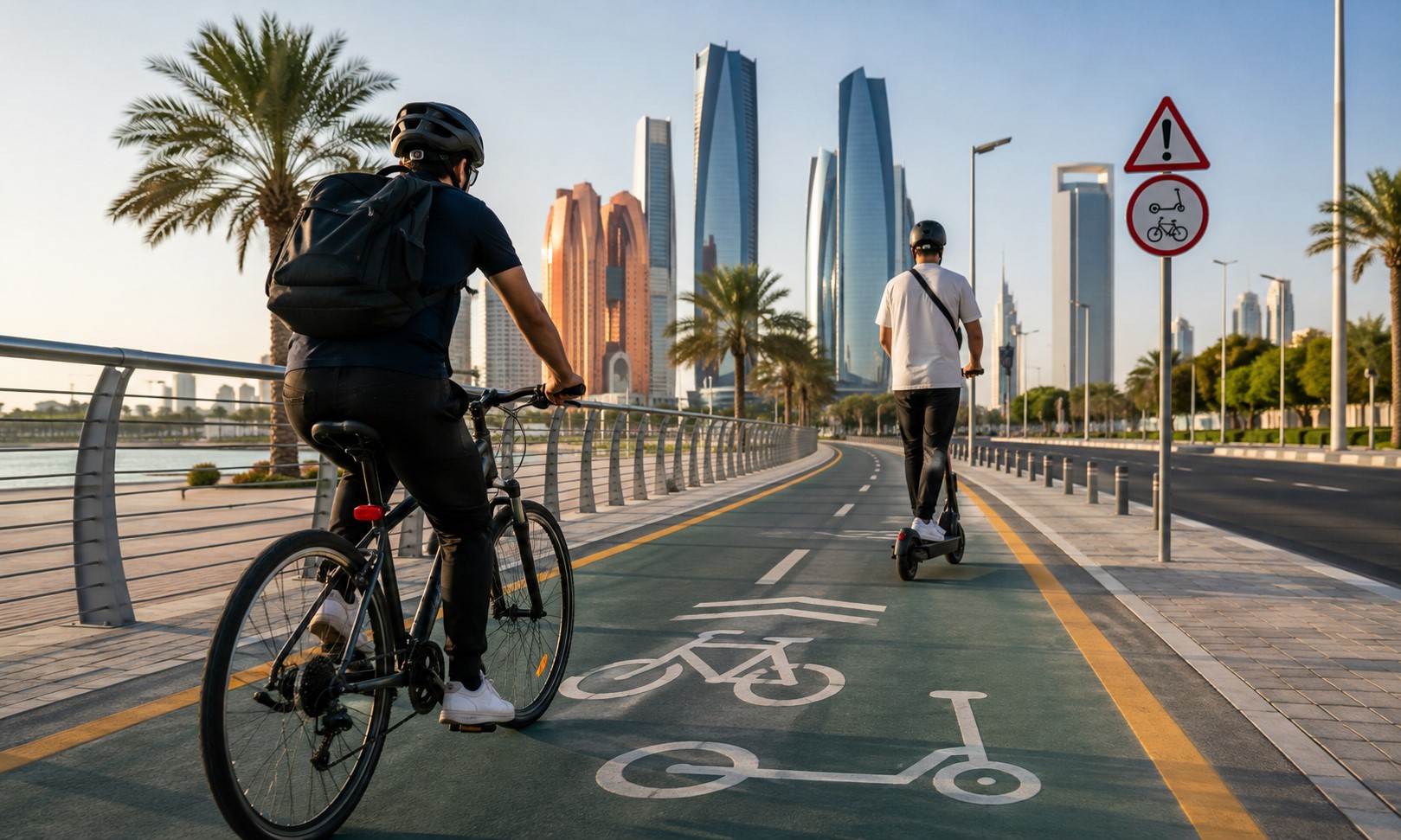
E-scooters and bicycles took over Abu Dhabi’s streets fast. Almost too fast for the rules to keep up. They’re everywhere now, the last-mile solution everyone reaches for after the metro drops them a few blocks short. Convenient, sure. But convenience has a cost here, and it’s spelled out in fines that a lot of riders don’t see coming.
Poor lane discipline. Riding at night without lights. Cruising down a highway meant for cars. These aren’t rare mistakes. They’re some of the most common ways riders unknowingly put themselves at risk.
Here’s the full breakdown of what’ll actually cost you.
Read More: Best Cycling Tracks in Dubai: Free and Paid Options for Every Rider
The Dh200 Violations:
These apply across the board, bicycles, e-bikes, scooters, and authorised mini-mobility vehicles, whether you’re using one personally, for delivery work, or through a rental service.
Each of the following carries a Dh200 fine:
- Riding on roads with a 60 kmph speed limit or higher without authorisation
- Ignoring safety standards, traffic signs, or official guidance
- Skipping the helmet or reflective vest
- Parking outside designated areas, or leaving your ride in a way that blocks pedestrians or vehicles
- Attaching a bicycle to traffic light poles or lampposts
- Following too closely behind other bicycles, vehicles, or pedestrians
- Failing to yield to pedestrians, or dismounting in restricted zones and crossings
- Carrying a passenger on a bicycle without manufacturer-approved passenger equipment
- Carrying a passenger on a scooter, period
- Overloading a bicycle to the point of imbalance
- Doing anything that endangers yourself or others
- Using an alarm or speaker in a way that disturbs people around you
- Using your phone while riding
- Wearing headphones that block out surrounding sound
- Riding against traffic direction
- Riding 20 kmph over the speed limit
- Not slowing down at road entrances, exits, or pedestrian crossings
- Riding through hazardous weather or zero-visibility conditions
- Holding onto a moving vehicle or trailer while riding
- Not stopping at least 5 metres from a stopped school bus
That’s a long list. But notice how many of these come down to basic awareness rather than technical rule-breaking.
Equipment Violations That Catch People Off Guard
This next set applies specifically to privately owned and rented bicycles, e-bikes, and scooters. Same Dh200 fine per violation, but these are about the machine itself, not how you’re riding it.
- Using a bicycle that doesn’t meet approved technical specifications
- No steering wheel bell or beeper installed
- Missing a visible white front light
- Missing a red rear light that works at night and connects to the brakes
- No reflectors on either side
- Rear-wheel brakes that don’t function properly
- Worn-out or loose tyres
- Cables and components that aren’t properly secured
- Modifying or boosting torque beyond manufacturer specifications
Here’s the thing about this category. Most of these are things you’d never notice until something goes wrong, which is exactly why they carry fines separate from riding behavior.
Where You Genuinely Cannot Ride — Dh500 Territory:
This is where the fines jump considerably, and where a lot of riders assume they’re in the clear when they’re not.
Unless specifically authorised, riding is banned in these situations, each carrying a Dh500 fine:
- On walking and jogging tracks
- On sidewalks, unless official signs or markings permit it
- On secondary or tertiary roads with speed limits of 60 kmph or above, except for groups approved by the Integrated Transport Centre and Abu Dhabi Police
- On bridges or through tunnels without designated bicycle, e-bike, or scooter lanes
- In areas where signs prohibit it, including temporary event zones — even if ground markings suggest otherwise
That last point matters more than people realize. A painted lane marking on the ground doesn’t override a posted sign. If there’s a prohibition sign up, that takes priority, regardless of what the pavement suggests.
Read More: 10 Student Discounts in Dubai You Should Know About in 2026
The Bottom Line For Riders
None of these rules exist to make riding difficult. They exist because bicycles and e-scooters share space with cars, pedestrians, and buses in an urban environment that wasn’t originally built around them.
A helmet, a working light, and a bit of lane awareness go a long way toward avoiding both the fines and the actual risk they’re meant to prevent.
