

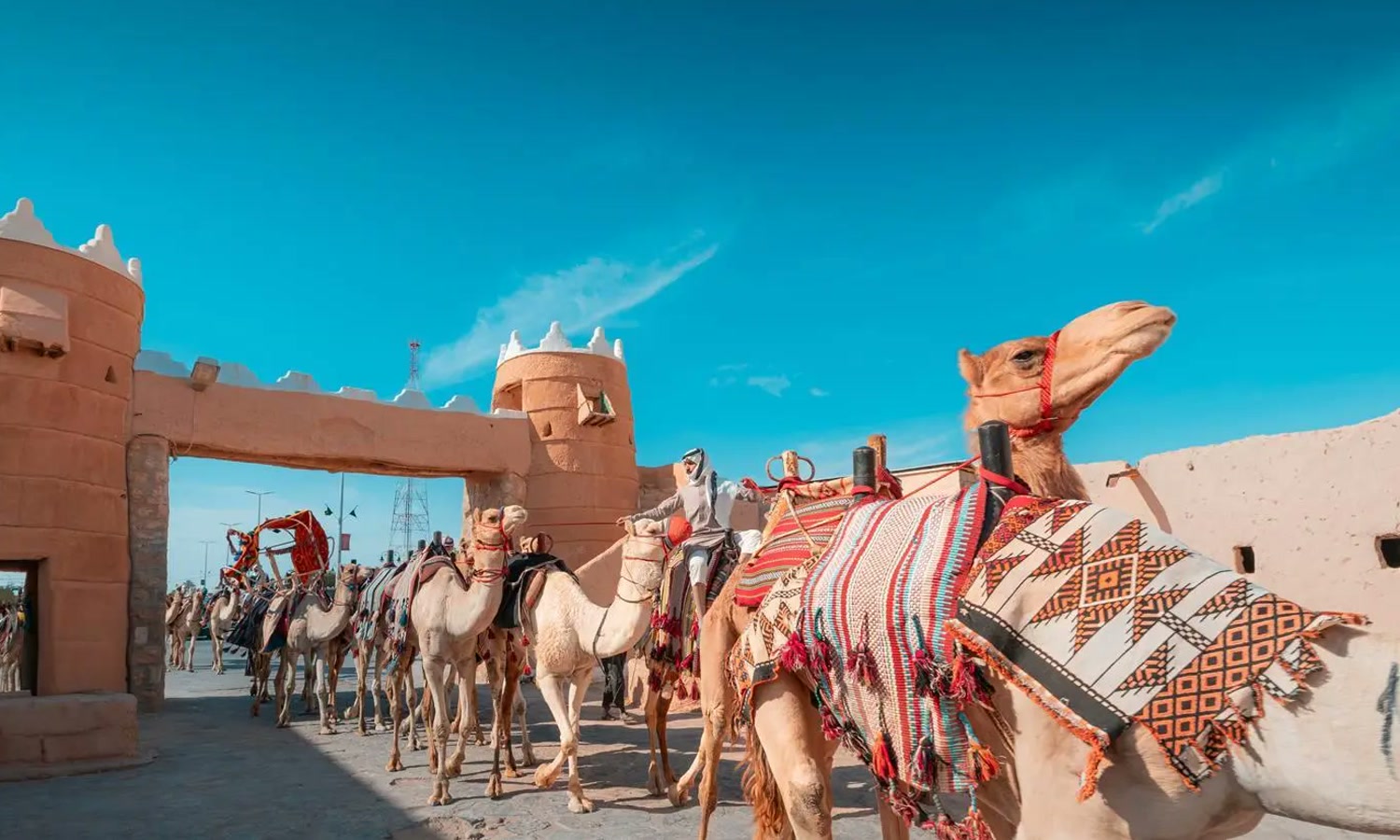
In Rafha, a town in Saudi Arabia’s Northern Borders region, a line of decorated camels moves slowly across the desert. The men leading them are the Saudi hajjana, traditional camel handlers. Fathers have passed their skills in guiding, riding and managing camels down to their sons for generations. This week the Saudi Press Agency documented them recreating the journeys of the old Arabian caravans. The pictures are a reminder that the camel is far more than a racing animal or a tourist photo stop.
The timing is interesting. The hajjana keep the slow, practical side of camel culture alive. Meanwhile, Saudi Arabia is turning the fast side, racing, into an organised professional sport with federations, cups and prize money. For anyone living in the Gulf, the two stories explain why camels still show up everywhere. You see them at national day parades and at some of the region’s biggest sporting weekends.
Who are the Saudi hajjana?
Historically, camels were central to transport, trade and daily life in the Arabian Peninsula. They allowed families and traders to cross long distances of desert that no other animal could manage. The people who knew how to lead a caravan, keep the animals in order, load them properly and read the terrain were essential to every journey.
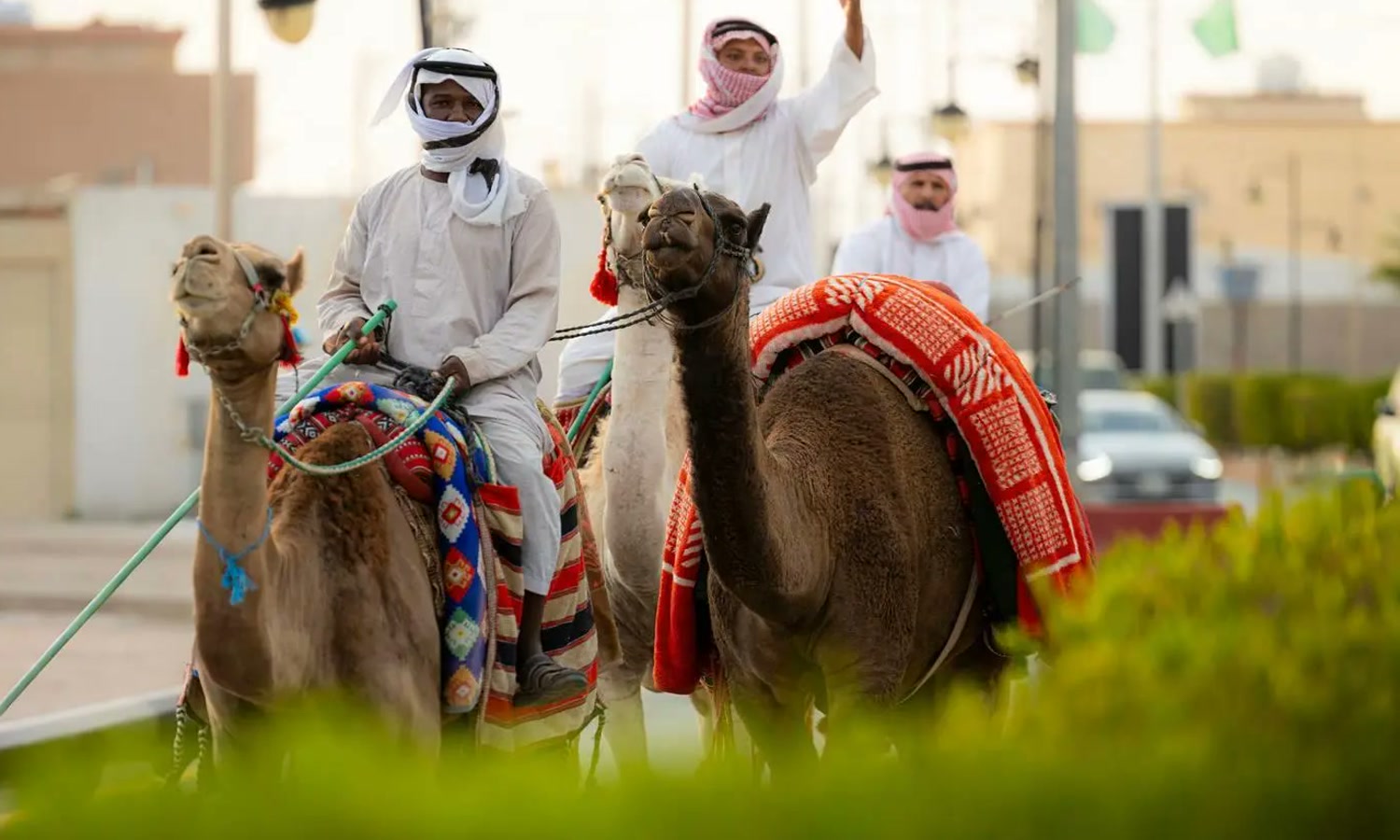
During the traditional treks in Rafha, the hajjana lead the caravans on foot or riding, according to the Saudi Press Agency. Their job is to keep the animals moving in an orderly line. They wear traditional clothing and dress the camels with saddles, colourful coverings and ornaments. Together, they recreate scenes that were once ordinary across the peninsula.
Rafha’s setting adds to the story. The town lies close to Darb Zubaydah, the historic pilgrim road that ran from Kufa in Iraq through northern Arabia to Makkah. For centuries, caravans just like the ones the hajjana now recreate carried pilgrims and goods along routes like this one.
From caravans to festivals
Today these traditions have moved from necessity to celebration. Today, caravan treks like the one in Rafha appear at cultural festivals and national celebrations. They show younger Saudis, residents and visitors how their grandparents travelled.
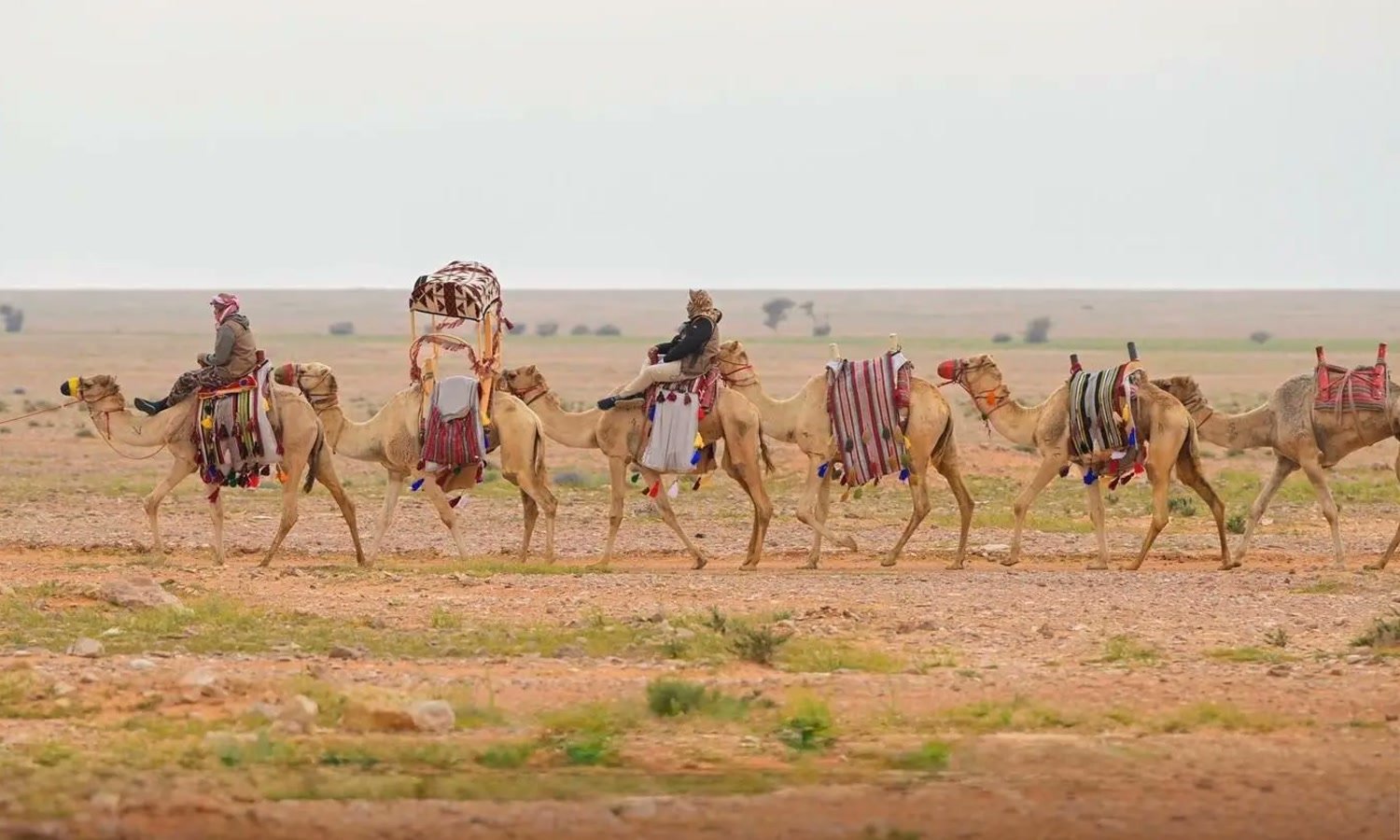
What makes the hajjana worth paying attention to is that their knowledge is practical, not just ceremonial. Guiding a group of camels across open ground, keeping them calm and moving at the right pace, is a skill nobody can learn from a book. So every staged trek gives the next generation a chance to learn from someone who actually knows how.
Camel racing becomes a professional sport
On the other side of camel culture is racing, and here the change in Saudi Arabia has been fast. The Saudi Camel Federation now runs tournaments and sporting programmes and works to widen participation. It has also been raising the sport’s standards and building its international profile in line with Saudi Vision 2030, while opening the door for a new generation of competitors.
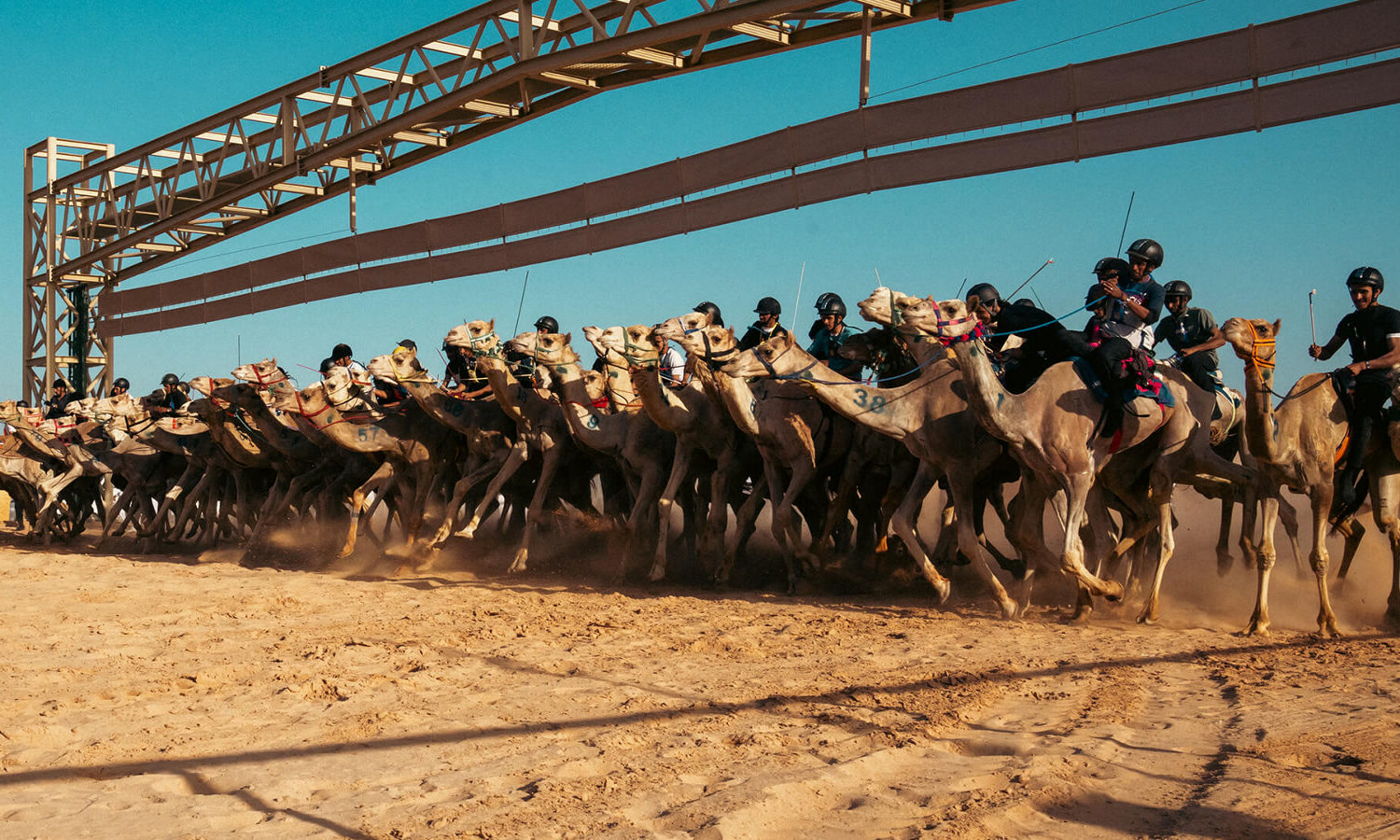
The Kingdom’s racing calendar keeps growing. The Saudi Olympic Camel Cup took place from 1 to 5 November. Meanwhile, the AlUla Camel Cup, run by the Royal Commission for AlUla with the Saudi Camel Federation, has become one of the sport’s most photographed events. Its races run against the sandstone mountains of the Old Oasis.
Rima Al-Harbi and the women of camel racing
The biggest shift may be who is in the saddle. Camel racing has traditionally been a male sport, often passed down within certain families and tribes. That started to change at AlUla.
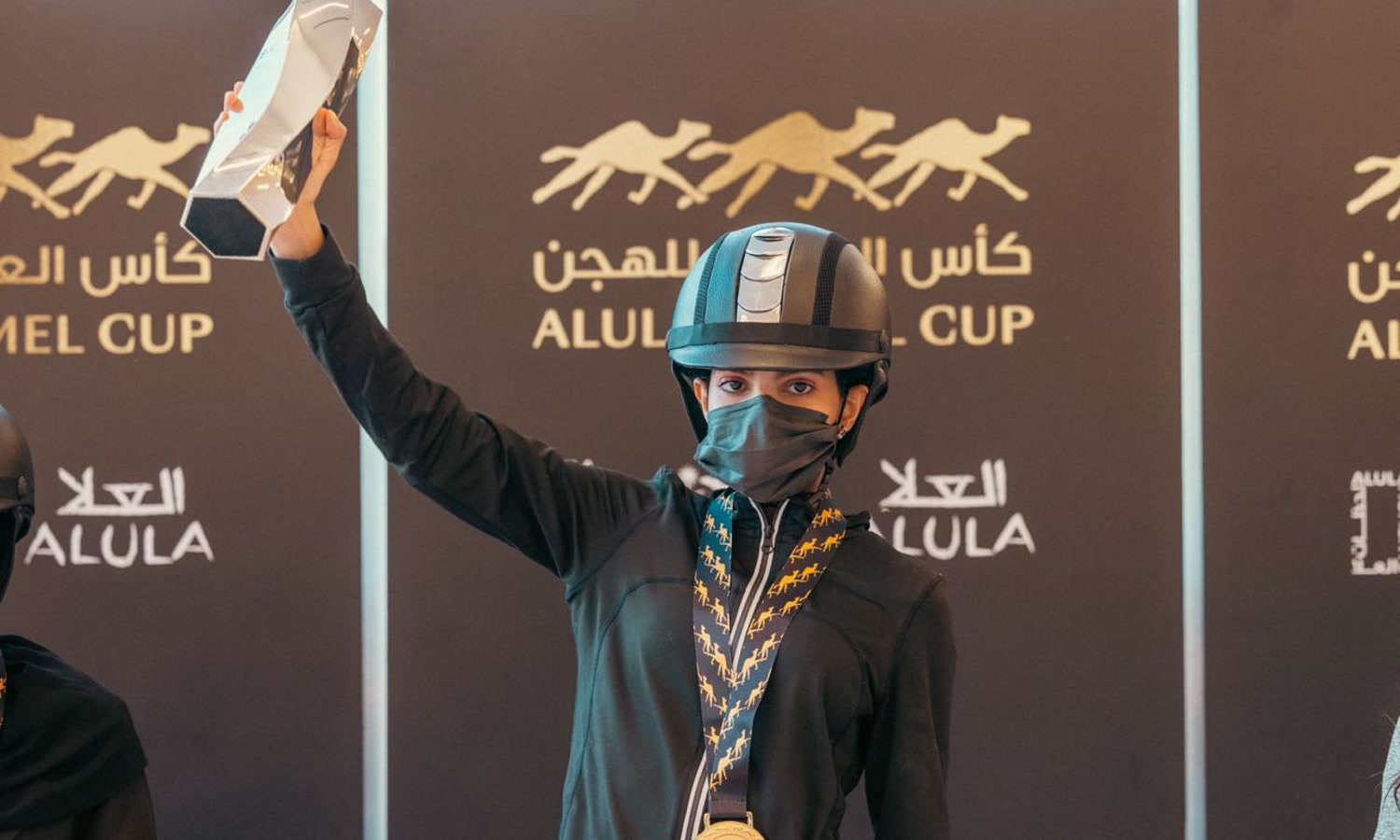
At the first AlUla Camel Cup in 2023, Rima Al-Harbi was the only woman racing in a field of men. When the second edition, held at the Old Oasis from 24 to 27 April 2024, added a women’s category, she returned and won it, becoming the first Saudi woman to take the women’s camel racing title at the competition. She has since started a small training club for local women who want to try the sport.
It is a small number of riders so far, but it matters. For generations, the sport stayed closed to most people. Now it has a visible female champion, and that tends to bring the next group of riders with it.
Why the Saudi hajjana matter if you live in the Gulf
For residents, camel culture is not something you have to fly to Rafha or AlUla to see. Racing season across the Gulf runs through the cooler months. In fact, the UAE has some of the region’s best-known tracks, including Al Marmoom in Dubai and Al Wathba in Abu Dhabi. Races usually start early in the morning. In the UAE, owners drive alongside the track and steer small robot jockeys by remote, which is a sight in itself.
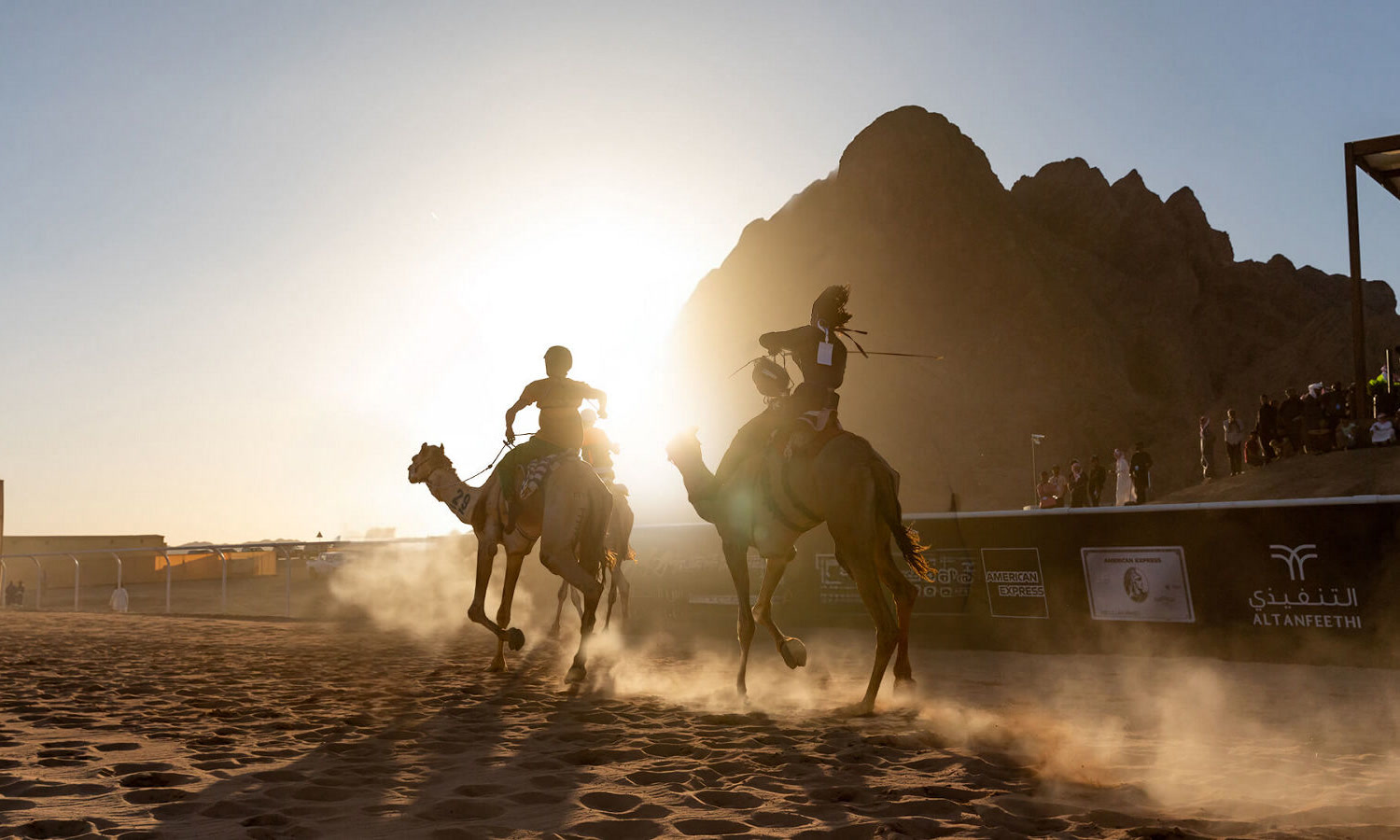
If you would rather see the heritage side, winter festivals are the easiest way in. You can also see camel parades, caravan displays and traditional crafts at events like the Sheikh Zayed Festival in Al Wathba, which runs through the winter.
A few tips if you go:
- Go early. Racing usually happens in the cool of the morning, and the best light for photos is just after sunrise.
- Keep your distance. Camels are calm with their handlers but can be unpredictable with strangers. Ask before you approach or take close-up photos of the animals or their owners.
- Dress for the desert. Mornings in winter can be surprisingly cold, and sand gets everywhere once the races start.
- Look beyond the race. The saddles, coverings and ornaments on display at heritage events are handmade, and many of the patterns are specific to regions and tribes.
The bigger picture for the Saudi hajjana
Saudi Arabia is doing two things at once with the camel. It is protecting the old skills of the Saudi hajjana while building a modern sport with women now on the podium. Rather than one replacing the other, they feed each other. Racing keeps people interested in camels, and the hajjana keep the knowledge that made camels central to Arabian life in the first place.
As the Saudi Press Agency put it in its report, the hajjana remain a living connection between the Kingdom’s desert heritage and its evolving sporting landscape.
FAQs
What does the word hajjana mean in Saudi Arabia?
Hajjana is the local name for traditional camel handlers in Saudi Arabia. They guide, ride and manage camels using skills passed down through generations, and today they recreate the old caravan journeys at heritage events.
Where is Rafha?
Rafha is a town in the Northern Borders region of Saudi Arabia. It sits near the historic Darb Zubaydah pilgrim route that once linked Kufa in Iraq with Makkah.
Who runs camel racing in Saudi Arabia?
The Saudi Camel Federation organises tournaments and sporting programmes, works to widen participation and promotes the sport internationally in line with Saudi Vision 2030.
When was the Saudi Olympic Camel Cup held?
The Saudi Olympic Camel Cup ran from 1 to 5 November 2026.
Who is Rima Al-Harbi?
Rima Al-Harbi is a Saudi camel racer who became the first Saudi woman to win the women’s camel racing title at the AlUla Camel Cup in 2024. A year earlier she was the only woman racing against men at the first edition.
Where can I watch camel racing in the UAE?
Two of the best-known tracks are Al Marmoom in Dubai and Al Wathba in Abu Dhabi. Racing takes place during the cooler months, usually early in the morning.
