

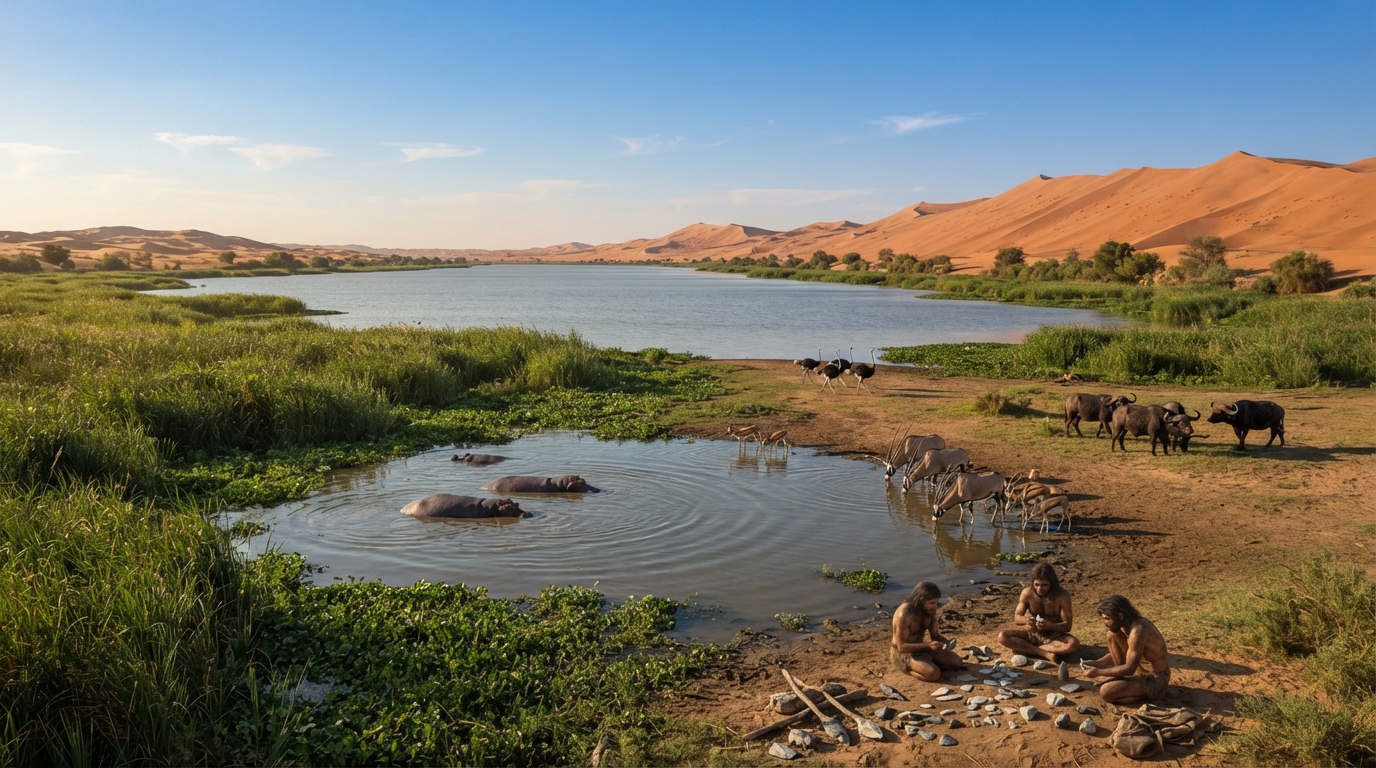
Quick answer: Hippos once lived in Saudi Arabia. Around 125,000 years ago, part of what is now Saudi Arabia’s Empty Quarter held a freshwater lake called Mundafan, about 340 square kilometres wide and nearly 29 metres deep. Hippos, long-horned buffalo, oryx, gazelles and ostriches lived around it, and early humans made stone tools on its shores. The findings, published in the journal Science, come from the Uruq Al-Julaybah site in Najran.
It is hard to picture hippos in the Empty Quarter, one of the driest places on Earth. Yet that is exactly what a team led by Saudi Arabia’s Heritage Commission, Australia’s Griffith University and King Abdullah University of Science and Technology (KAUST) has documented. The Saudi Arabia hippos discovery has been picked up worldwide, but most reports stop at the “green desert” headline. Here is what the team actually found, what is still uncertain, and why it matters for how we see the Gulf’s past.
Where the Saudi Arabia hippos discovery was made
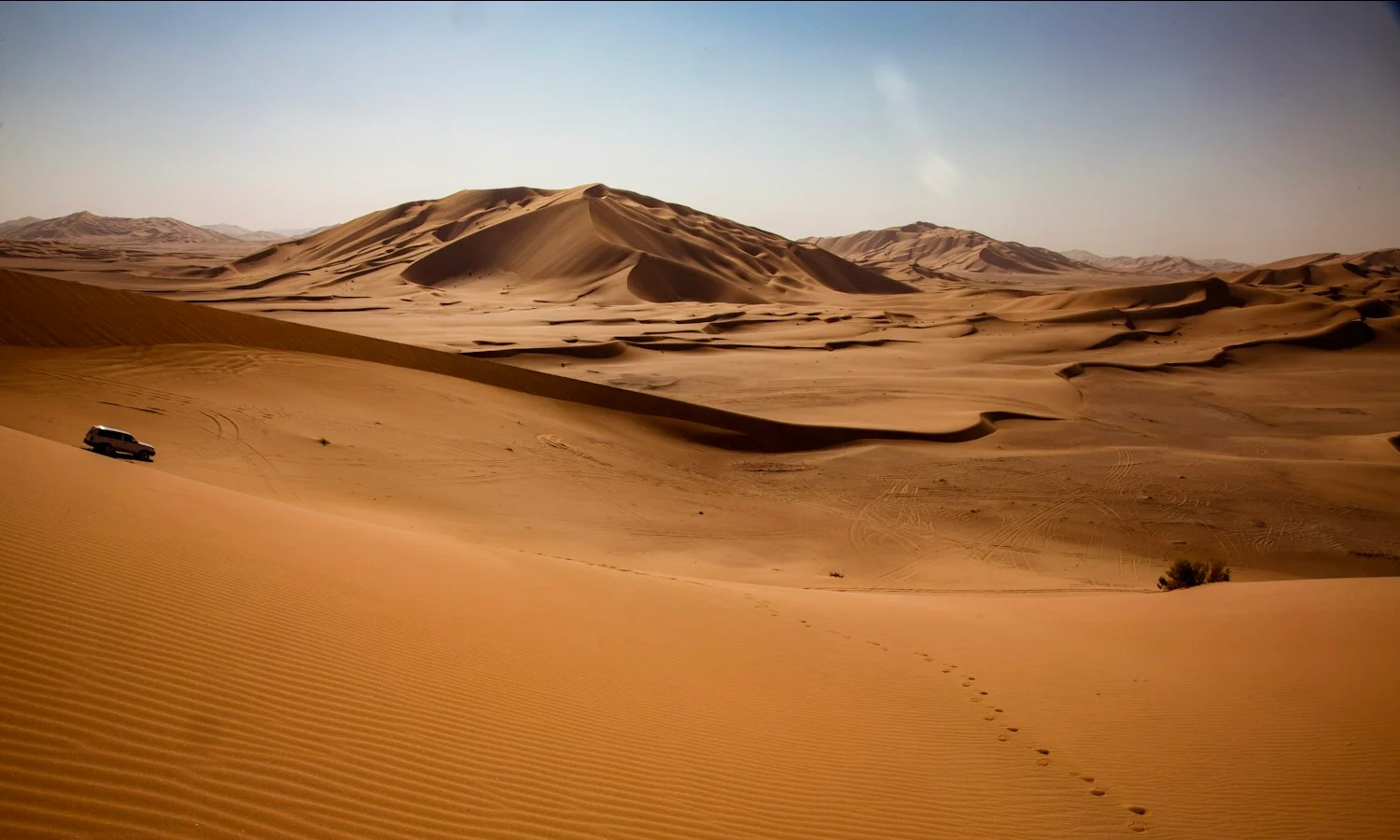
The site is Uruq Al-Julaybah, on the shores of the ancient Mundafan lake in the Najran region, on the edge of the Rub’ al Khali. During one of Arabia’s humid periods, the lake created a stable source of fresh water surrounded by open grassland. Researchers surveyed more than 130 locations around it, according to Arab News.
The discovery in numbers
| Finding | Figure |
|---|---|
| Age of the site | About 125,000 years |
| Size of Mundafan lake | About 340 sq km |
| Maximum depth | Nearly 29 metres |
| Locations surveyed | More than 130 |
| Fossils recorded | More than 500 plants, vertebrates and invertebrates |
| Stone artefacts | 5,511, more than 98% made from flint |
Hippos and the other animals that lived around the lake in Saudi Arabia
The fossil list reads more like an African savannah than modern Arabia: hippopotamuses, an extinct long-horned buffalo, camels, Arabian oryx, gazelles and ostriches, along with molluscs and freshwater crustaceans. Hippos in particular need deep, permanent water, which is why their presence tells scientists the lake was not just a seasonal pool.
How early humans lived at Mundafan
The stone tools were made with the Levallois technique, a method that needs careful planning to shape flakes and points. Microscopic and chemical tests found traces of plant fibres, wood, resins, fats and collagen, suggesting people worked with both plants and animals. Some points show impact fractures and signs that they were fixed to handles, in other words used as weapons.
Researchers also detected compounds linked to Acokanthera schimperi, a plant historically associated with hunting. Several headlines have called these “poisoned arrowheads”. The study is more careful: it says there is not enough evidence to show exactly how the material was used. Dr Salma Hosawi of King Saud University also urged caution on this point when speaking to Arab News.
Why the discovery matters for the Gulf
For a long time, Arabia was treated as a corridor that early humans passed through on the way to somewhere else. Finds like this show people repeatedly lived, adapted and thrived here when the climate allowed. It joins other Saudi discoveries, such as ancient footprints in Tabuk more than 120,000 years old, and evidence of human activity at Shuwayhitiyah in Al-Jouf going back about 1.3 million years.
Can you visit the site?
We have not found any information suggesting Uruq Al-Julaybah is open to visitors. It is a remote research site in the Empty Quarter. If the discovery has sparked your curiosity, Najran’s Al-Ukhdood archaeological site is an established heritage destination in the same region.
Read More: 5 Stunning Natural Landscapes in the UAE You Have to See at Least Once
Pro Tip
When you share this story, link to the original research rather than viral summaries. The “poison arrow” claim is a good example of how a careful scientific finding can get exaggerated as it travels.
Our Take
This is one of those stories that changes how you look at a landscape. The dunes many of us drive through on weekends once surrounded a lake big enough for hippos. It is also a reminder that the Gulf’s story is far older than its cities, and that some of the most important chapters are still being written by researchers in the region.
FAQs
Did hippos really live in Saudi Arabia?
Yes. Hippo fossils were found around the ancient Mundafan lake in Najran, dating to about 125,000 years ago.
Where is the Mundafan lake?
In the Najran region of southern Saudi Arabia, on the edge of the Empty Quarter.
Who carried out the study?
Saudi Arabia’s Heritage Commission with Griffith University, KAUST and other Saudi and international institutions. It was published in the journal Science.
Did early humans use poison arrows in Arabia?
Traces of a plant linked to hunting were found, but the study says there is not enough evidence to confirm how it was used.
